
Chris Taylor writes:
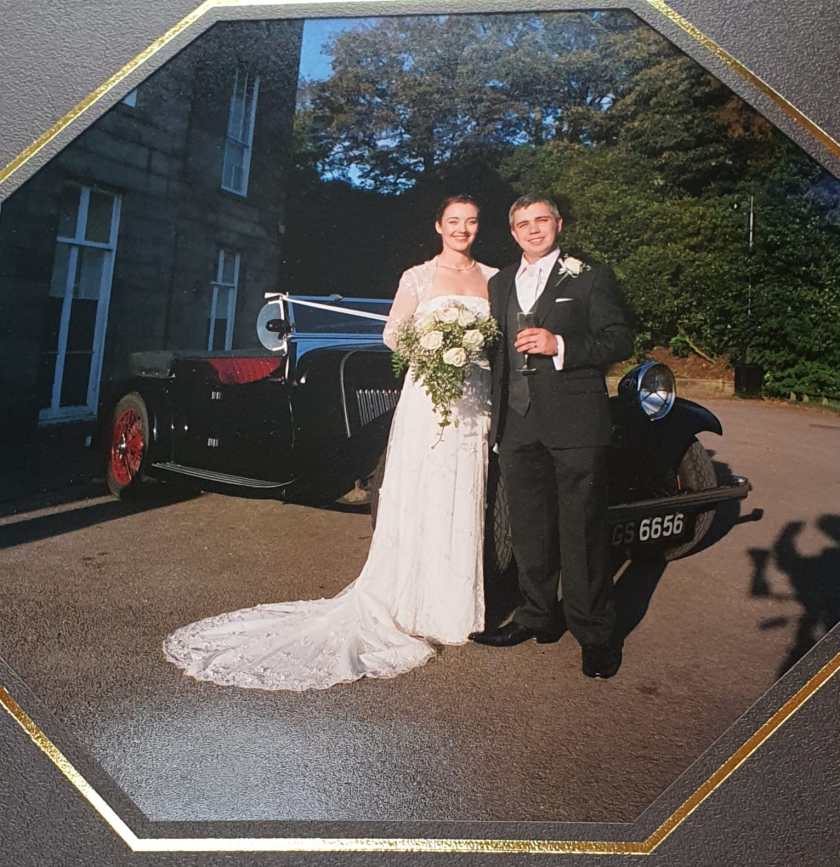
The story of GS 6656 as a working car starts in December 1936 on the stand of James Galt at the Kelvin Hall Scottish motor show. There, a farmer from near Forfar, Mr Ian Pattullo, purchased the car after some negotiation. The car was put to continuous use even through the war years until May 1951. Then, Mr Patullo reluctantly part exchanged the car for a reconditioned Bentley. I say reluctantly as Mr Pattullo reported to me that he had no intention of parting with GS. Following the hostilities new cars were impossible to obtain, so the firm of Hoffmans of Halifax, who were offering the reconditioned Bentley, said ‘one in one out or no sale’.
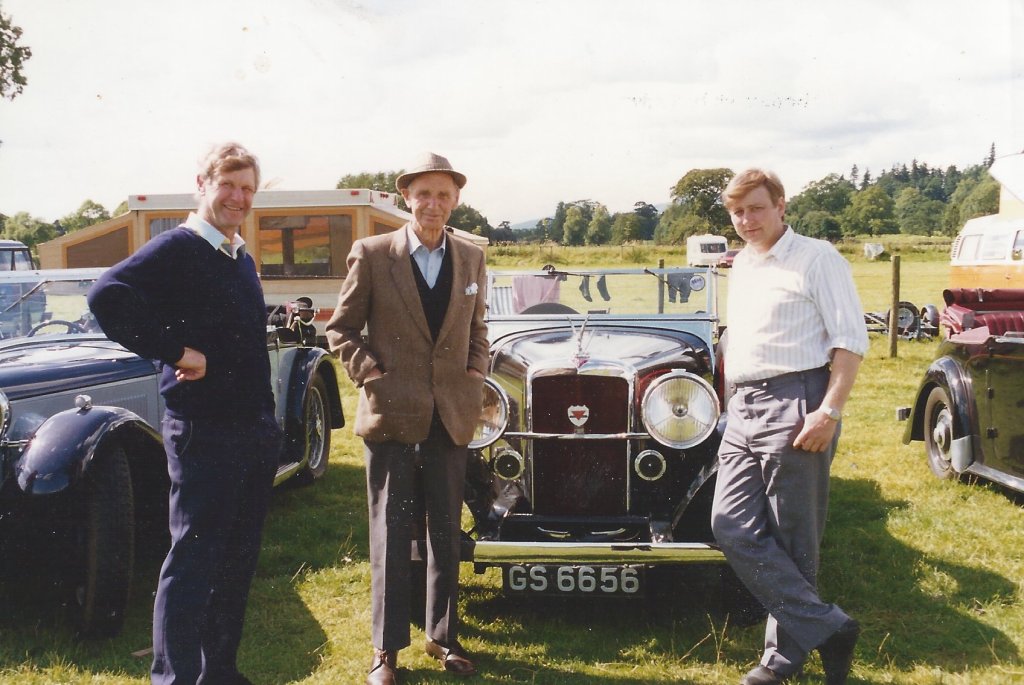
So, reluctantly on the morning of Saturday May 26th 1951 at 09.00 hrs indicating 139,400 miles GS was taken away to be sold on to a Mr Kenneth Waghorne of Derby and later Pontefract. This owner, who I have not been able to trace sold the car in March 1960 to Mr. Joseph Bell of Earby Lancs. I met Mr Bell some 20 or so years after he sold the car and he remembered it well with very fond memories although by now the car was nearly 30 years old and showing its age. Mr Bell estimated he completed around 30,000 miles with the car.
So on to GS’s salvation. The car was sold again this time to Mr William Melville F.I.Mech.E of Handsworth in October 1962. The records I have from Mr Melville shows that GS was in a very dilapidated state in every department. He set about the mechanical and coachwork restoration of the car.
However being a highly skilled engineer and a meticulous chap, the rebuilding of the car was carried out as a rolling restoration. It was brought back to being structurally solid and mechanically as near perfect as possible over the next few years. Throughout his entire ownership GS was Mr Melville’s only working car and was used for both business travel and leisure towing a caravan.
Mr Melville told me a lovely story. As he was now getting older, the caravan was becoming impractical. It had fallen out of use. In his words, “you know when a politician tells me a nuclear electricity power station is perfectly safe, I know he is lying to me. As an engineer, I know nothing is perfectly safe. One evening, I was watching the news and heard about the nuclear bomb protesters at Greenham Common. My thoughts wandered. If the politician was willing to lie to me about nuclear power stations, what else regarding these bombs would he be willing to lie about?”
As the newsreel progressed, Billy commented on the appalling weather. The protesting ladies were enduring it. With dogged determination, GS towed the caravan to the ladies’ campsite. Then, he gifted it to them to ease their plight. What they must have thought when an old man in a very old car arrived and gifted them a caravan one can only imagine, but I bet they were grateful. His words to me were that they were carrying out essential check and balance duties so must be supported.
So we arrive at my involvement with GS. I had organised a gathering of Alvis cars at the Yew Tree Pub in Waterhouses near Ashbourne. I had been mentored into matters Alvis By Mr. Kenneth Frith a local pub landlord who in earlier years was a famous pianist with swing bands like the NDO.
Ken’s advice was that if you ever organise a do then to make it a success you should personally invite people to it so even though this was prior to easy printing. Another Alvis pal had a sister in catering and was able to print us some invitation cards as she did menus so one was posted out to every AOC member within a 50 mile radius of the pub. We were very successful in attracting cars out of the woodwork. These cars hadn’t been seen for many years. However, that is a story for another time.
Two weeks after the event I received a letter of apology from one Wilam Melville for non attendance at my event at the Yew Tree on the Sunday coming , he said had not used his Firebird for about 6 months due to ill health. I called the number on the letter and had a wonderful conversation with Billy. He did admit that when I said the event had been and gone that he was now in his eighties and didn’t recommend it. His grasp of dates and times was not wholly accurate, so having had a good conversation about his Alvis the call ended.
My Alvis situation at his time was that my restoration of an SB Speed 20 had got to the point where I had taken the car off the road in preparation for a visit to the paint shop and trimmers to finish the project and I had missed not having a running car that season. The call to Billy was still echoing in my mind and a thought was developing that this Firebird might be a good stop-gap whilst the Speed model was being finished. It must here be remembered that my Alvis mentor Ken Frith held regular car meetings in his pub where discussions about such cars as Firefly’s, Firebirds and Silver Pests (not a spelling error) were not allowed, and by that I don’t mean frowned on – I do mean not allowed!
So after some more thought I telephoned Bill and once I had reminded him of our previous conversation. He did agree that he had been thinking of selling GS and so we agreed I should call to see the car. Driving to Woolaston I met Bill for the first time and we just gelled instantly you know how it is when conversation regarding engineering and all matters technical just flows with ease and in effect the deal was done. Except I had not yet seen the car, so we went to a lock-up some short distance away and when the door opened my heart sank as what I was looking at did not really match Bills memory of it, six or so months neglected in a concrete lock up is not the ideal environment for an out of use car and indeed Bill himself was a bit shocked.
So what met me was a car still with its original 1936 upholstery in shreds and tatters, a paint job done some 25 years earlier, chrome well past its best and soggy tyres, however there was some life in the battery and Bill as bill wasn’t up to swinging the car so I took the handle and the engine instantly fired and ran extremely well therefore fully redeemed itself. We went for a short drive, me at the controls, fortunately I was fully practiced with the centre accelerator and within yards I knew this car was not as it appeared but extremely well set up, everything worked, no rattles, shakes or bangs it went where I pointed it, it stopped and was in every respect a really good car as long as you didn’t look at it.
Returning to the garage I asked Bill if the car had a hood as it was folded and he replied “well it had when I bought it” – he had never once put the hood up in all his time with GS so an abandoned attempt to put the hood up at least showed the frame was there along with shreds of hood material dangling like the hanging gardens of Babylon. Even so the car had endeerered itself to me so much with its readiness to start, its rock solid body and its flawless road manners I instantly made the decision to buy it. Back at the house, we agreed on the price. On 25th September 1987, GS was mine.
I returned the following day on the train to take the car away. I was totally confident the journey home would be event-free. My short drive on Friday gave me all the confidence I needed to know that Bill was a man of engineering excellence with no regard for aesthetics. This turned out to be wholly accurate. Apart from some crust on the regulator points stopping it from charging the battery, which was quickly sorted, everything else was fine.
Nearing Disley, I heard myself talking to Ken Frith, who sadly had died the previous year, by saying out loud while driving, “Well, Ken, for the first time on the subject of cars, you are wrong about this one. All that talk of how underpowered Firebirds were is actually wrong. The car performs well. It is a pleasure to drive and not at all as you have described them.”
GS is now 51 years old with 295,000 proven miles. Additional unknown mileage can be added from Mr Waghorne’s nine years of ownership. I am certain it was plenty. The car was in excellent condition when Ian Pattullo sold it. I have its full service history up to 1951. It was certainly very far from it when Bill Melville took the car off Mr Bell.
So the story of GS with me to the present day is one of continuous use. I performed rolling improvements and essential maintenance over the 40 years of ownership. I honestly say no car could have served its owner better or more faithfully. The seat padding did not provide any support. I had the car fully trimmed by Don Jones of WP 608 fame that winter. I also had chroming done in batches. I used bits off my Speed 20 while the work was being done. This allowed me to keep using the car. Some revision to the mudguards was also done whilst having the car resprayed within a year of purchase.
The engine performed perfectly but did suffer its only failure during my ownership. It dropped a valve head in year two. I put it right, and Billy felt somewhat guilty. He asked me to bring the cylinder head to him, so we could reassemble it in his workshop.
I had a masterclass with him. Using an engineer’s straight edge, Billy declared the head casting to be ‘hogged.’ I thought it was a wasted journey. Then, one of the biggest dreadnought files I had ever seen came out. In shock, I said, “You’re surely not going to file it flat.” Bill replied, “No, you are!”
So under his expert guidance, the hogging was removed, and then we moved to the surface plate. With hand scrapers, the head was rendered 12-point flat. As Bill said, so little material is removed per stroke. One would have to work very hard to make a mess. So with the head rebuilt, I said, “All I need now is a new gasket and the car is working.” Bill then asked if the gasket was damaged. I replied no. He said, “On a flat surface, carefully clean it and put it back.” I did that reluctantly. The gasket served for the next 25 years. It finally wore out in this thin area.
The Firebird design has a weakness. There is slight instability on the outside of the pushrod chambers. This causes slight movement between the head and block. As a result, oil started being ejected from what was now a missing gasket. When I removed it, the copper was so thin it was like foil, not by the combustion bores but just along the edge by the pushrods. This led to a second cylinder head overhaul. It was silly not to, while it was removed, and another used but perfect gasket was fitted and that is still there.
Aside from these two bits of bother, the car has been totally reliable. It has completed another 150,000 miles during my 40 years of ownership. The car has visited France, Portugal, Spain, Italy, Belgium, Germany, Switzerland, Denmark, and Holland, most of them more than once, all trouble-free. I am sorry to admit, however, that in my 38th year of being GS’s custodian, the car has been abandoned in favour of another.
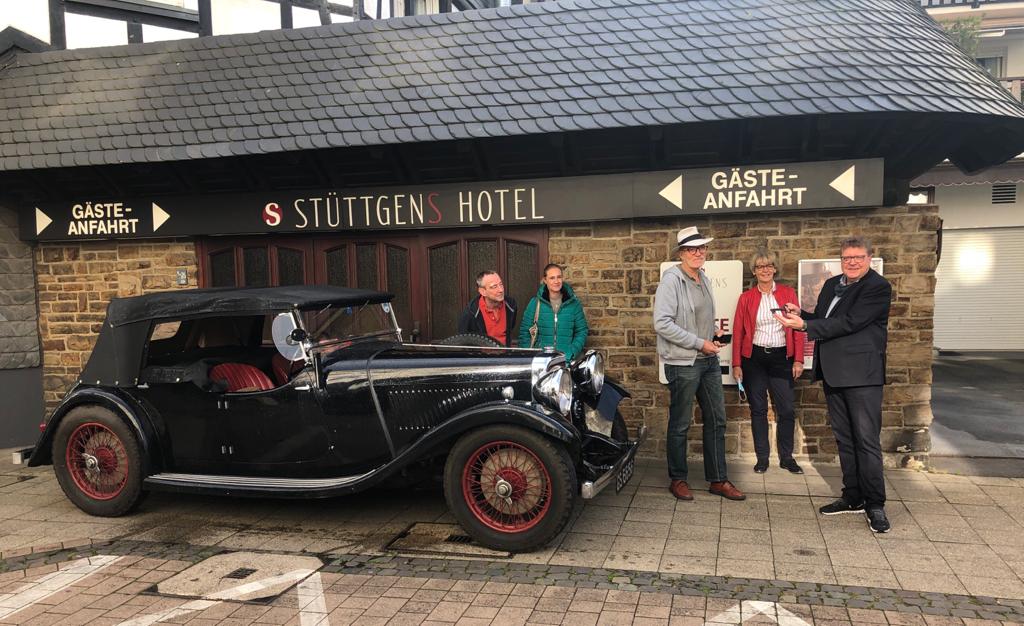
You will remember me saying I bought GS as a stopgap to spur me on to finish the Speed 20. Well that car was in bare aluminium awaiting painting in 1987 and I have been so utterly content with the Firebird it still is in aluminium waiting paint, however another Speed 20 came my way and this one has been a challenge to restore and although I probably shouldn’t have taken it on as a project. I did.
The Firebird has been put away in a remote garage over the winter of 2024-25. When I came to get the car out for the 2025 season, history repeated itself. It took me right back to my first encounter with the car. There was a little power in the battery, so a couple of pulls on the handle started the engine as if it had been running the day before. This has always been the case with the car. However, not unusually, the clutch was stuck. Out came the specially curved carving knife, but this time it had no effect. Then, I heard and felt through the pedal something happen or break in the clutch pit. I simply could not free it.
The upshot of this is that with my determination to finish the ‘new’ Speed 20 GS has lain neglected for what has been an outstanding summer season for weather and now as we are in autumn 2025 I visited the car last week and came away quite upset with myself as the car is looking a bit forlorn and dusty. Again I reiterate that it seems to me history has repeated itself and I wonder if GS is telling me it’s time it moved on to its next custodian, that would be a wrench but time will tell.
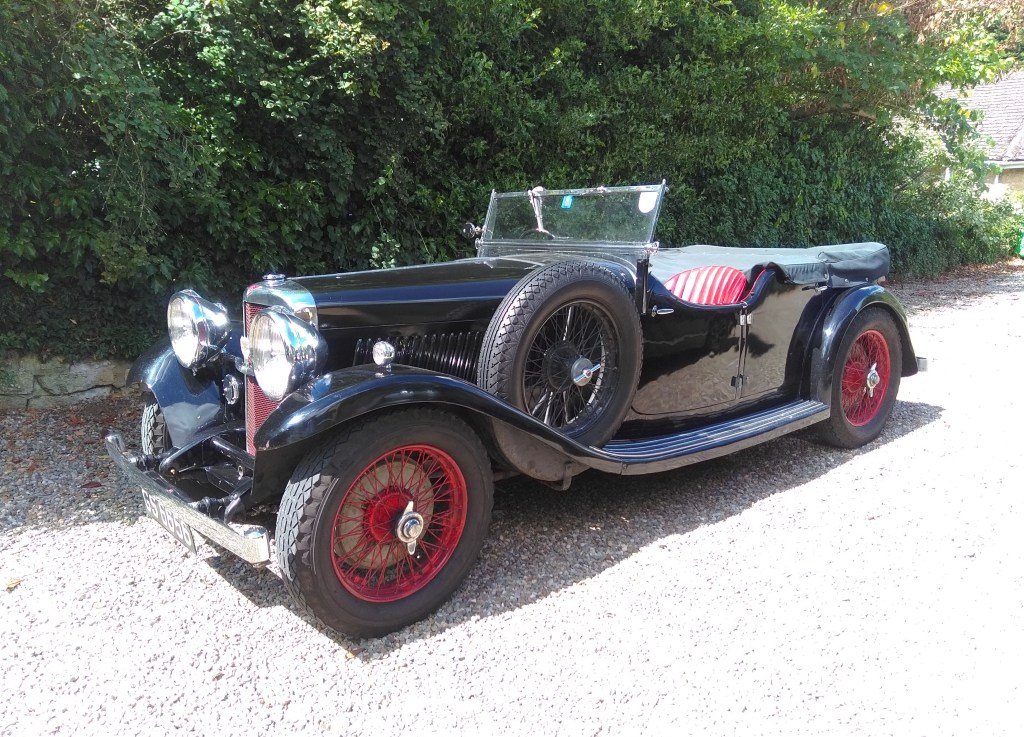
The story of GS 6656 is probably at a crossroads after 5 owners over 89 years. An answer will emerge in 2026 for its 90th anniversary. In summary, the car has completed 425,000 proven miles. Mr. Waghorne, Billy’s main and big end bearings, have completed 255,000 miles. They still hold perfect oil pressure because the bottom-end hasn’t been touched since he overhauled the engine in the mid-sixties. The car has been retrimmed once, and I have just put a new hood on it for the second time.
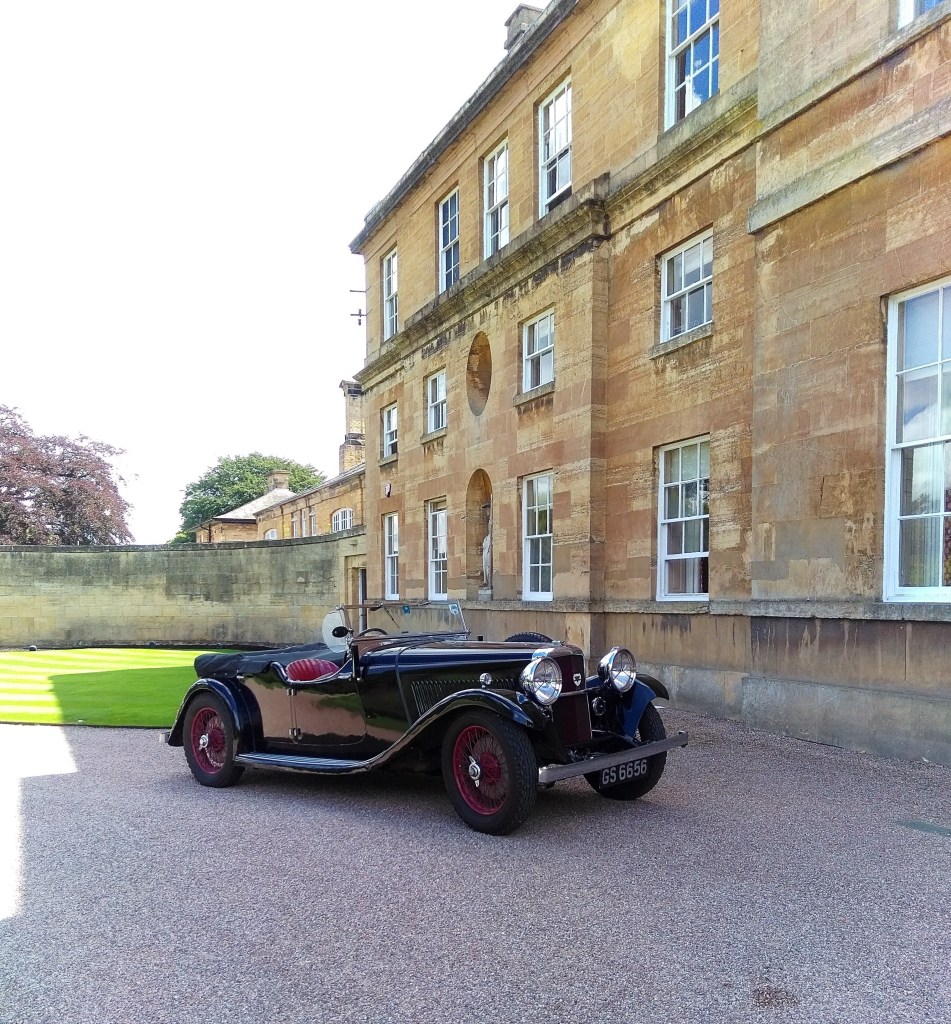
My conclusion is that the Alvis firebird 4 cylinder car of 1934 to 1936 (of which GS6656 was the last one built) must surely rate as one of the best most reliable and economical cars of all time regardless of Marque.
2026 has seen GS move to its new custodian, who has also restored an Alvis before. He now has a 60 year old and a 90 year old! Chris Hewitt’s wedding car was the Firebird fifteen years ago…..
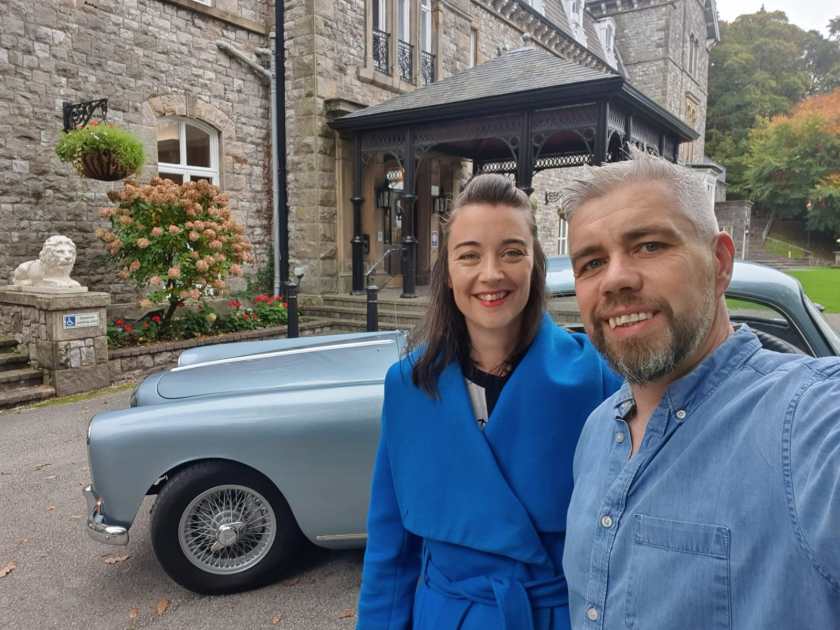
and 15 years later with their TF21
 Alvis Archive