
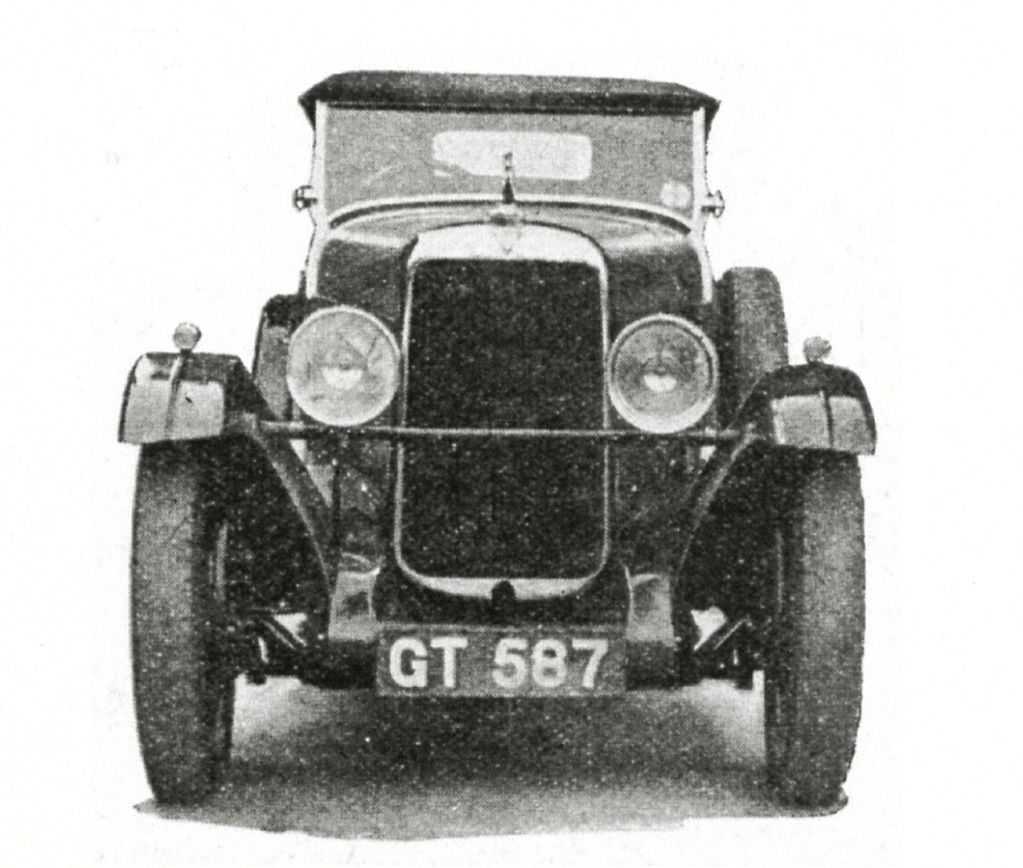
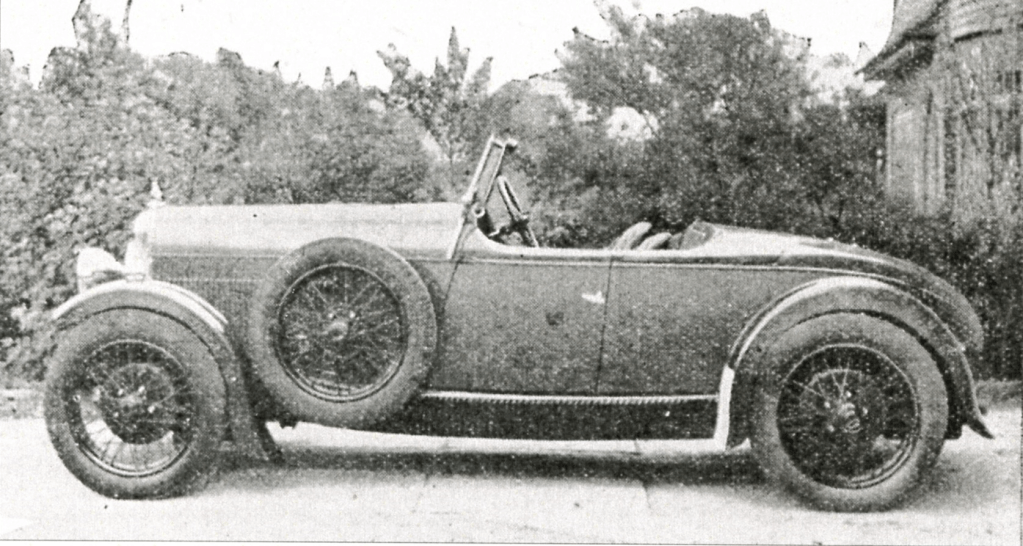
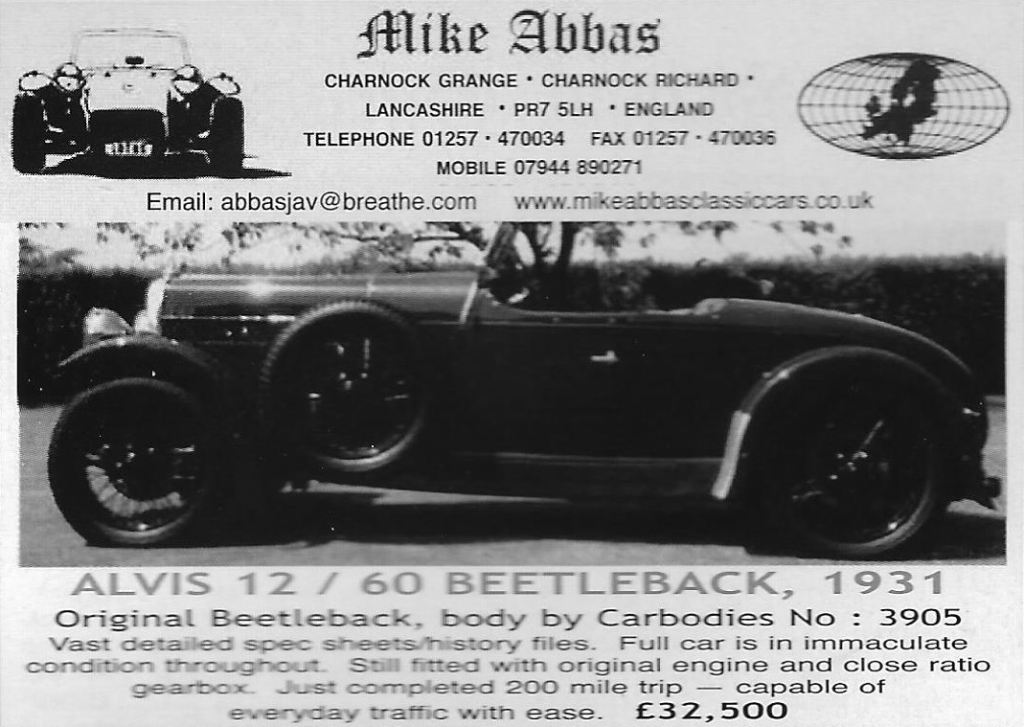
To begin at the beginning. The TK 12/60 beetleback Car no 13871, chassis no 8987, was despatched from Holyhead Road on 18 July 1931 to Charles Follett in London, where it was registered GT 587. It was painted black and green with green leather upholstery, and the guarantee was registered to D Brooke of 3 Onslow Square SW7 on 27 August 1931.
It may perhaps lay claim to be the first Alvis to have been comprehensively ‘restored’ in the modern sense of the word; that is completely stripped to a bare chassis, with all components and bodywork refurbished and reassembled to new car standards. But this was all a very long time ago. The story appeared in The Autocar for 14 April 1944 as No. 200 in the splendid wartime series “Talking of Sports Cars”, with which the magazine kept up the spirits of its readers in those dark days when it seemed that enjoying the freedom of the road might never return.
The then owner of the car, R H Carter of Solihull, bought it in August 1941 after it had endured ten years of very hard use. He describes its condition on purchase as “appalling – the engine in particular giving forth a heart-rending clatter”. His aim was “not so much to overhaul an old Alvis as to build a completely ‘new’ one on the basis of the old, working to standards no less exacting than those of the makers when first building the car. At the same time I intended to stick as closely as possible to the original ‘vintage’ specification”.
The engine received an extremely comprehensive overhaul with many replacement parts, carburettors, electrical items and radiator were overhauled by the makers, and the gearbox received new gears. The body was removed, the chassis cleaned and painted, and all the chassis components – springs, shackles, brakes steering, shock absorbers etc – were replaced or refurbished. To remove the gum left by the use of ‘Pool’ petrol, the fuel tank was removed, filled with caustic soda solution and “boiled vigorously on the kitchen stove”. (Don’t try this at home). The body was replaced, new floorboards fitted, instruments refurbished, seats reupholstered and new hood and sidescreens made. After replacement of the near-side rear body panel, the car was resprayed in two shades of green.
All this work took eleven months. The owner takes up the story: “I brought the car home in all its glory on July 31st (1942) – the last day of the basic petrol ration – with about six hours and a pint of petrol to spare. I can say little as yet of the performance, for although the engine was exceptionally free, thanks largely to the careful bedding-in of the crankshaft, I treated it very gently, and anyway, I drove it only some 70 miles in all. I have, however, read a copy of The Autocar road test of the model, and as I see no reason why the performance of my car should in any way fall short of the very creditable performance of the original, I look forward to the prospect of enjoying some highly satisfactory motoring in the, I hope, not too distant future.” (The Autocar’s testers had recorded a timed speed of 71.4 mph over the half-mile, and 10-30 mph on second gear in 6.6 seconds).
The writer pays handsome tribute to the contribution of his father – “the presiding genius on the job” – to the successful outcome of the rebuild. I hope that all reading this are similarly fulfilling their duty to pass on their Alvis expertise and appreciation to the next generation.
Fortunately the owner did not have too long to wait to enjoy his ‘new’ 12/60, although even after the war ended, petrol rationing remained in force until 1952. R H Carter does not appear ever to have been a member of the Register, but he did belong to the VSCC. The accompanying photograph shows him on 23 April 1949 competing in Speed Trials at Silverstone, an event of historical interest as it was the first Club meeting to be held there, unchanged from the WW2 airfield created in 1943. Cars were run in pairs over a kilometre on one of the runways, the VSCC Bulletin reporter commenting: “the first two-thirds were up quite a decent hill”. Forrest Lycett in his famous 8-litre Bentley opened the course. He took his responsibility to set an example seriously, recording a time of 29.69 seconds and “crossing the finishing line at some 115 mph”.
A splendid entry was received, of the sort regrettably rarely seen today. This was particularly true of the Edwardians, amongst which were Pomeroy’s Prince Henry Vauxhall, two Alfonso Hispano-Suizas, Milner’s 22-litre Benz, Clark’s 1914 GP Mercedes, Samuelson’s 1914 TT Sunbeam, Ewen’s Itala and Anthony Heal’s 10-litre Fiat, with a Silver Ghost and a Stanley Steamer included for good measure. No less than three big supercharged Mercedes ran, the Lycett Bentley was driven by Leslie Johnson, who was closely involved with ERA and was to be the co-driver of the Aston-Martin which won the Spa 24-hours race later in the year, Rob Walker drove his Darracq with streamlined saloon body which had competed at Le Mans in 1938, Lady Mary Grosvenor competed in her Alta, and there was a fine tussle for supremacy between a clutch of 4½-litre Bentleys and 30-98 Vauxhalls.
Vintage Alvis entries were driven by Daniel Richmond, later of Downton tuning fame, (listed as 1926 and 1496cc – do we know which car this was?), Paddy Denton in the 1924 200-Miles Race car 2931, and R H Carter in the 12/60. Richmond’s best run was in 43.44s, Denton’s 39.4s. Carter ran in company with G R Grigs’ 1933 AC 2-litre drophead coupe. On his first run the Alvis recorded 46.00s to the AC’s 47.14s. Contrary to the impression given in the photograph, on the second run the AC led from the start to about halfway, when the Alvis drew ahead to record 46.61s to the AC’s 47.14s. Raymond Way’s BMW 328 won the class with a time of 32.2s. A similar car was entered by Betty Haig, although she was a non-starter. It may not be widely known that she was an early member of the Register, owning a 1924 SA 12/50 duck’s-back. Fastest time of the day (no pedantry please Mr Editor, this is how it is recorded in the results) was made by J B Norris’ 2-litre Alvis in 28.43s and fastest vintage was Stubberfield’s 1926 Type 35B Bugatti with single-seater bodywork and twin rear wheels, which hurtled up the course in 28.8s to average 77.5 mph.
The 12/60 was retained by its rebuilder until 1955, when it passed into the hands of R Tetther who joined the Register in February of that year. It has subsequently been enjoyed by a succession of owners, the majority having been members of the Register, and currently resides in Eire.
Greg Wrapson – first published in The Register Bulletin 238 in 2009.
 Alvis Archive