The name of Rowland Simmons pops up quite frequently in connection with the post war cars, and in particular his enthusiastic participation in rallying 3-litres that were wolves in sheeps clothing. A new page looks at some of his exploits, click Rowland Simmons
More recently, rallying by Alvis has been more likely to be of the gentle touring kind, such as the 2005 Swiss Tours.
We are looking forward to being able to rally forth again.
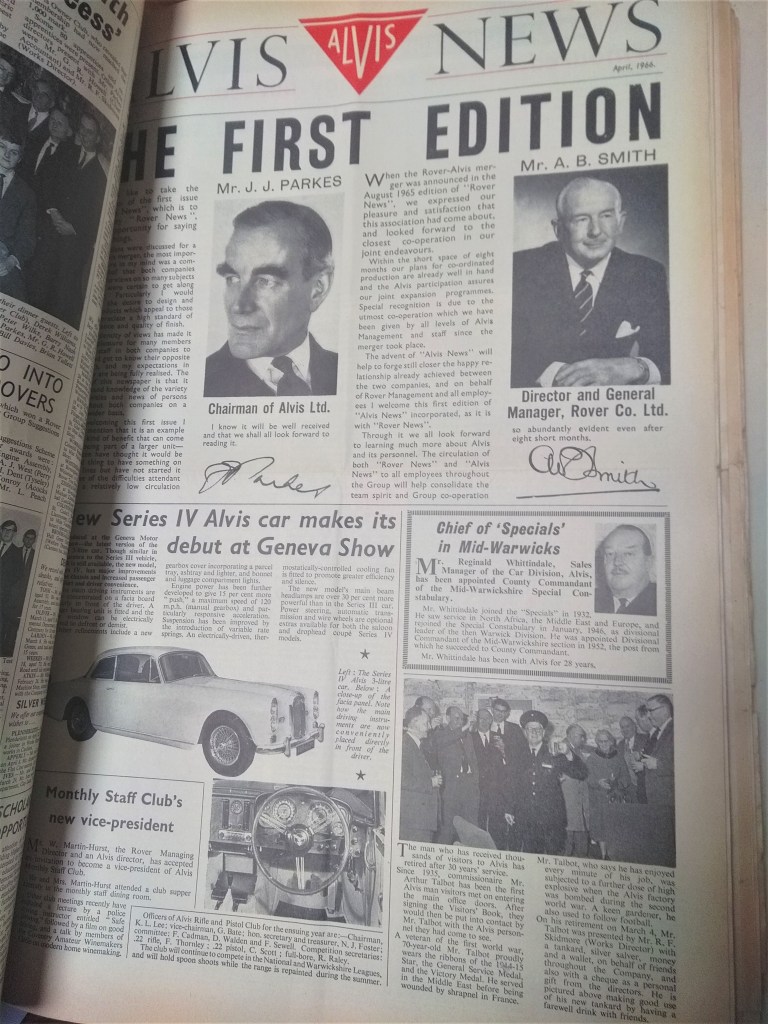
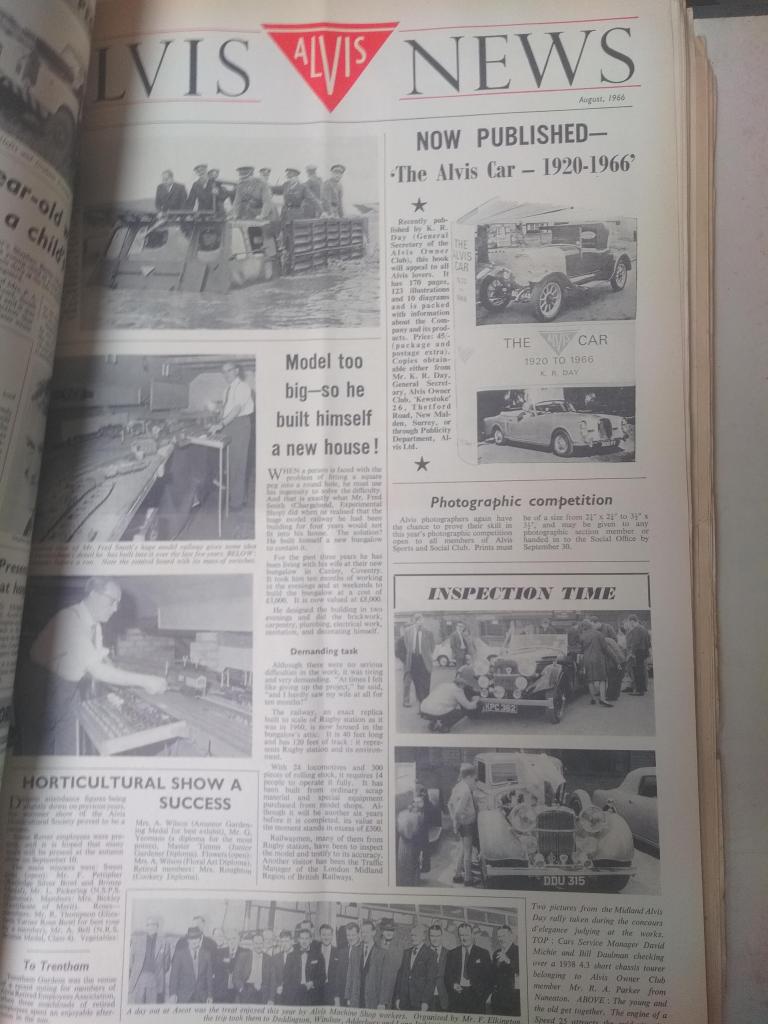
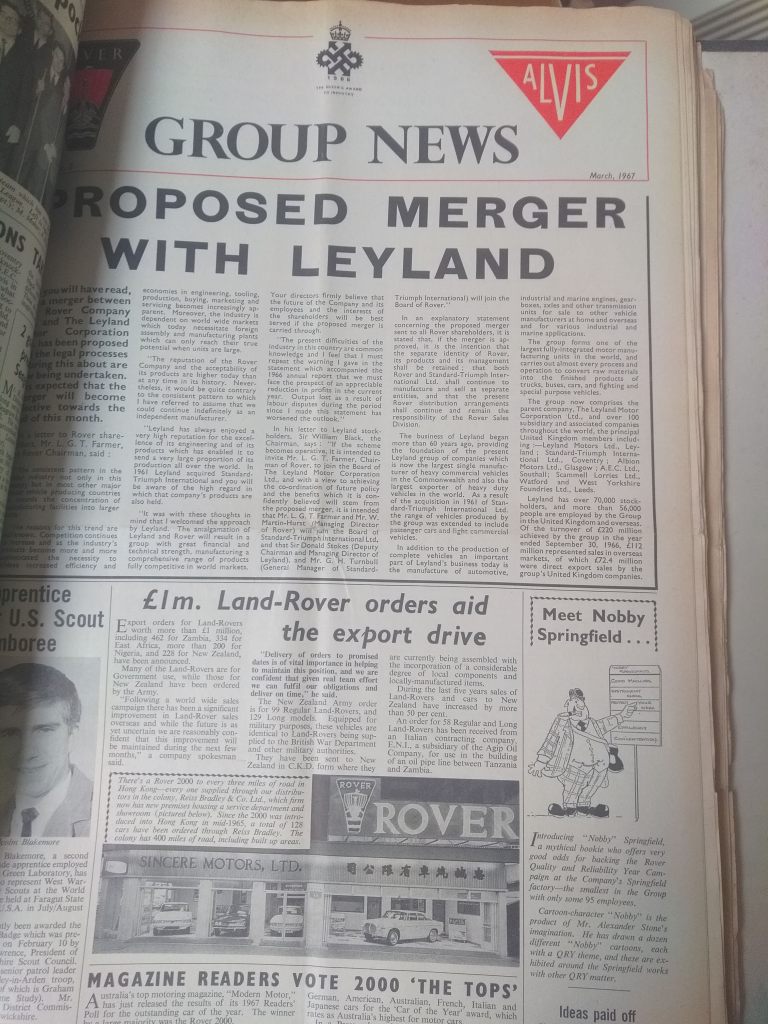
AOC members may have read the article in the latest Bulletin by Roy Probert about his time at the Alvis from the viewpoint of someone who came from Rover. Roy has kindly donated his collection of “Rover News” to the archive which covers the period from 1962 to 1971 and so chronicles the time when Rover merged with Alvis and then was subsumed into British Leyland. As a company and social history it makes fascinating reading sixty years later.
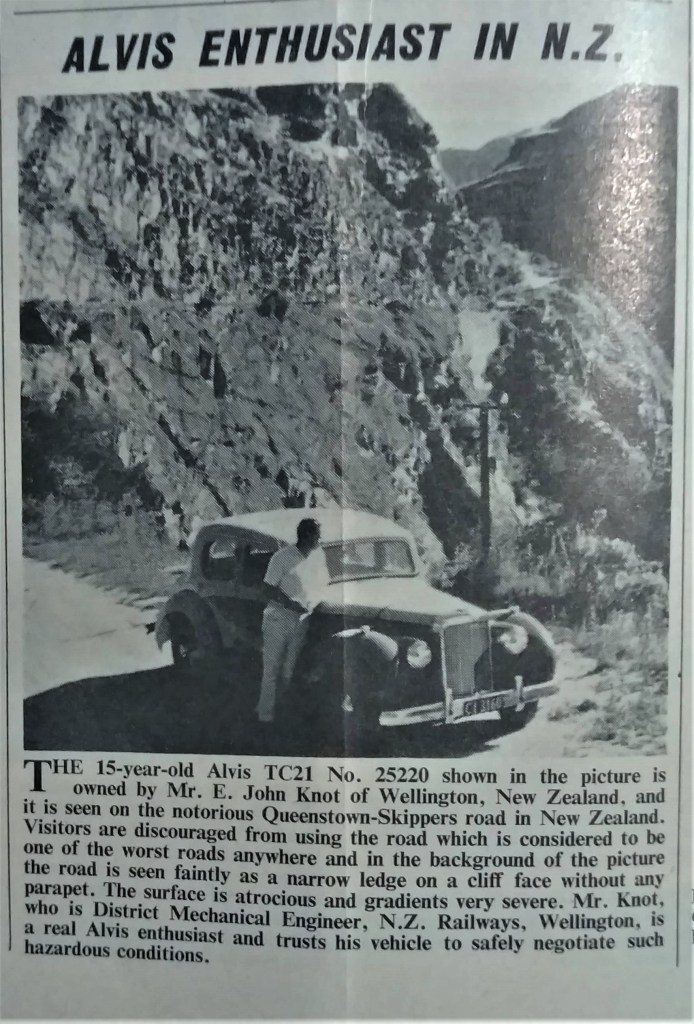
This historic edition appears as a supplement in Rover News for the first time in April 1966There are are frequent references to owners’ exploits in their old Alvis cars such as this Crested EagleThis TC21 is still around and is mentioned in the latest AOC Bulletin report on New ZealandAugust 1966 announces K R Day’s first book and reports on Midland Alvis Day held at the WorksIt’s 1967, so Group News….. a British Leyland Newspaper.
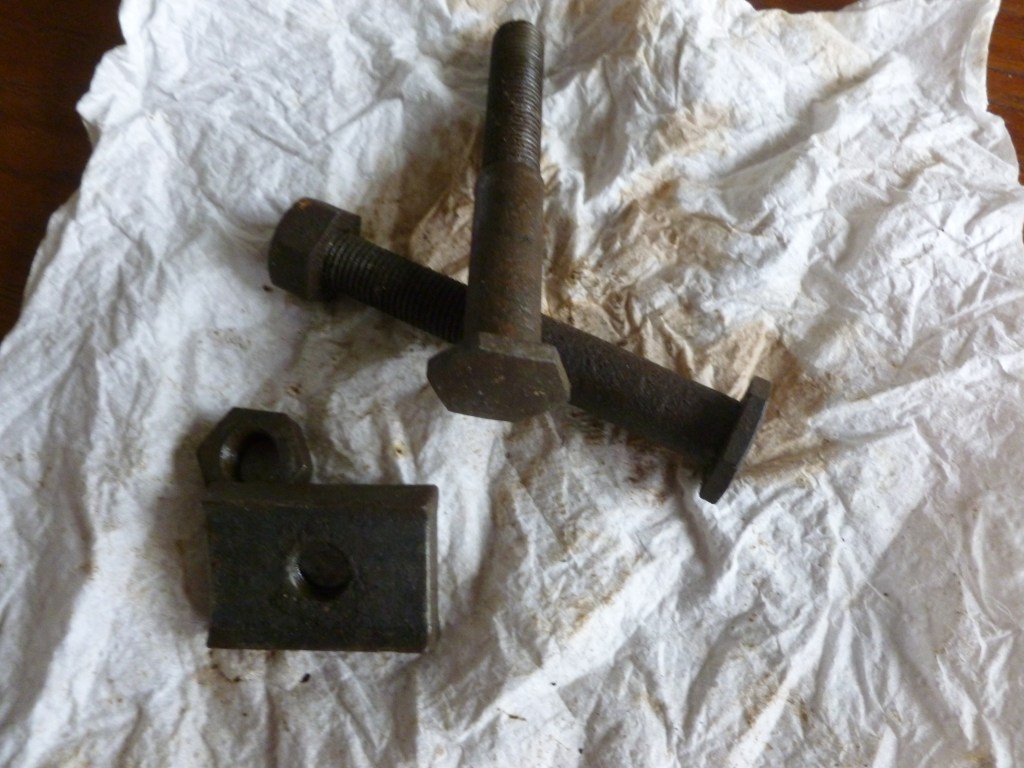
Adrian Padfield sent me this photo of some bolts he discovered in a garage clear out and hoped someone might recognise their application – please leave a reply if you know
For a bit of fun, there is a new page where your imagination can be exercised, click Alvisaurus
The next instalment of the FBHVC survey was published recently including
which confirms the perception that some Clubs are in decline and the average age of members continues to rise. It is sad that the opportunities afforded the now seventy plus year old Alvis owner in their youth to own a fine motor car to use every day at modest cost no longer exist. However, looking back at my first foray into continental motoring might just give a hint of what could be done to attract younger enthusiasts, but only if the trend to ever more costly events is reversed. First published in 1971, the story of my “Youngtimer” Alvis is told in 1971 Rallye Haute Savoie
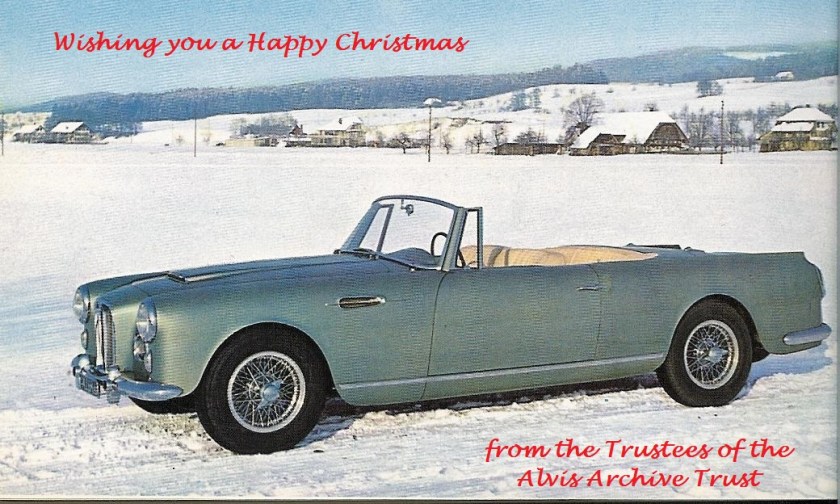
If you would like to make contact with Alvis friends over this festive period and have lost their address or phone number, just post a reply and we will see if we can help, or you can simply make a comment and see who replies.
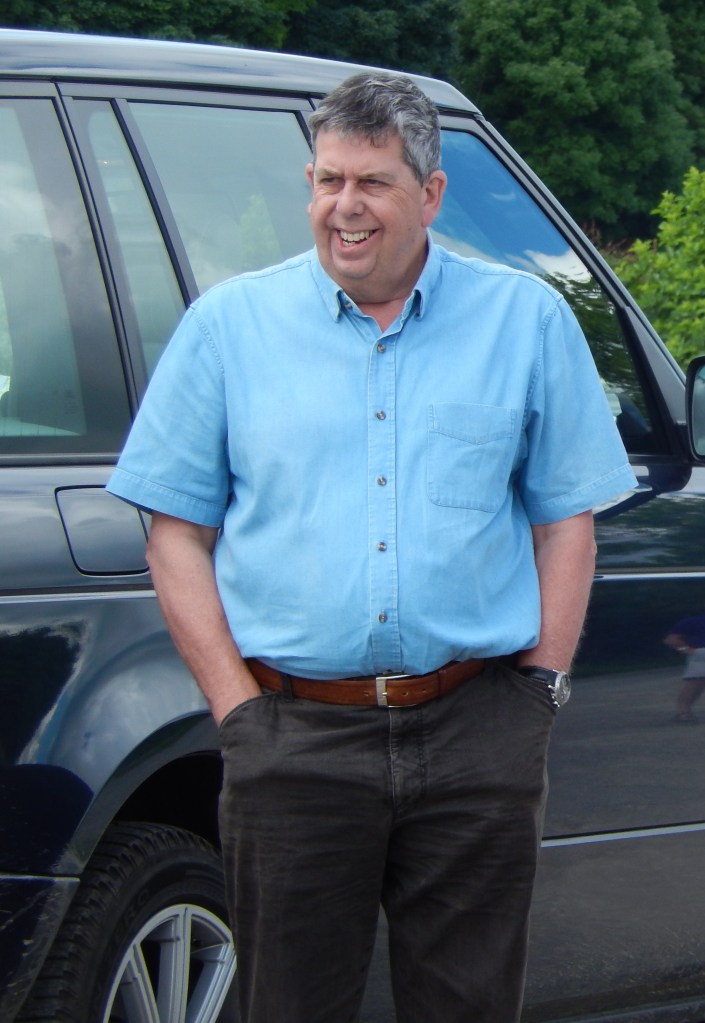
2020 has been a challenging year for everyone around the world and our activities have been curtailed by the lack of visitors to Bowcliffe. The trustees last got together in person in March for our AGM attended by just a few Friends. During lockdown, Neil Millington had a fall at home and following a hospital visit for a broken bone to be pinned, spent the summer in recuperation at home and unable to make our usual Wednesday archiving sessions. It became clear after a while that he was not making much progress with his mobility or with underlying Kennedy’s disease which made it difficult for him to eat and drink.
I received the very sad news yesterday afternoon that Neil died in Leeds Hospital (Jimmy’s) from pneumonia. It is a very great personal loss of a true friend and a wider loss to the Archive Trust to which he contributed so much.
Neil had retired early from the business he bought out of Smiths Industries, Autosound in Bradford, and enjoyed fifteen years in retirement with his fleet of coaches that he kept in his unit next to Autosound, worked on every Monday by his enthusiast friends. He had enjoyed a long association with Land Rover and a series of Bentleys to complement his TF21.
His wit, humour and good counsel endeared him to all who met him and we often joked that he was referred to as “a very nice man” on a number of occasions. His charm no doubt helped us secure our offices at Bowcliffe where we spent many happy hours. It will not be the same without him.
If you would like to share a memory of Neil, please leave a comment
John
Notice of the funeral arrangements:
Neil, a much loved brother of Susan, a dear Uncle of Daniel, Thomas and Charles. Also, a good friend to many. Due to current restrictions a private funeral will take place at Rawdon Crematorium on Saturday January 9th at 12.15pm. Family flowers only please but donations in memory of Neil may be made to Kennedy’s Disease UK. This can be done via Joseph Geldart & Sons, 11 Hopewell Terrace, Horsforth, Leeds, LS18 4NE
While there are hundreds of stories of cars and their owners recorded in the pages of the various clubs and magazines around the world every now and then one appears that is like no other. A chance donation of the Winter 1999 Issue of the AOC North American Section contained such a story.
ALBERT AND I
By Gillian Redfern-Rones
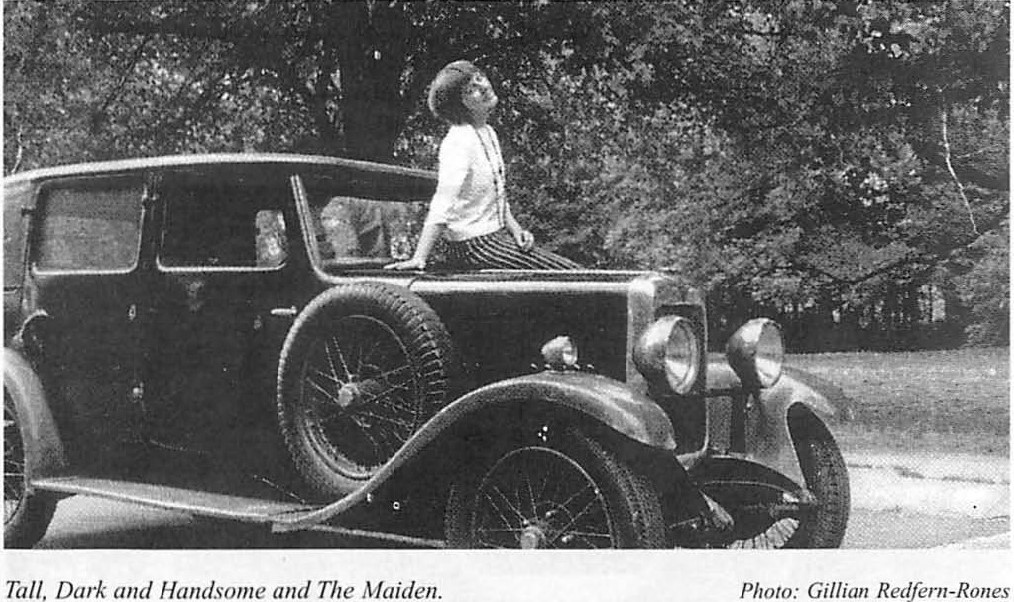
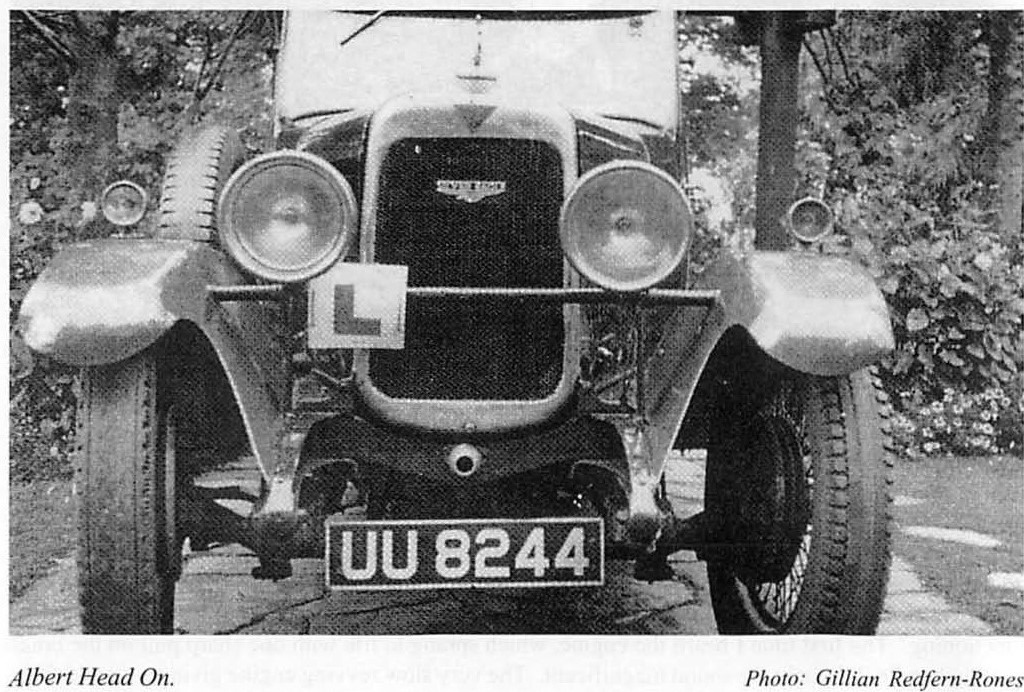
The first time I saw the Alvis it was parked in the employees’ car park of the in-house advertising agency of Smith Kline and French in South London. I knew nothing about cars, and I had never before seen an Alvis. It was love at first sight. I was after all only nineteen. The car, a Silver Eagle, was twenty-nine. Tall, dark handsome — with flashing red, curved wings, brass headlamps and honeycomb radiator. It stood majestically. Elegant. It spoke to me of the glamorous sparkling culture of the roaring twenties. Bertie Wooster. I could visualise its driver and passengers. Swathed in furs in the winter. Lazily lounging in cream silks in the summer. Scent bottles and cigar rests in the back, with gold silk tassels to hold on to. A sky light window in the fabric roof. Deep leather armchairs.
The Alvis was owned by the creative director, Willie Bloor who had hired me, a recent graduate from art college, as an assistant art director. The whole creative department was into vintage cars, particularly Alvis. Or is that Alvii? Paul Redfern, one of the copy writers, had a magnificent 1927 12/50 tourer. He later drove it around Russia and wrote a book about his adventures. Another assistant art director had a lovingly restored MG 18/80. I was delighted to be included in this crowd. Although I believe I was smitten with the visual aspects of the Alvis, I was also curious about the mechanical functioning. The first time I heard the engine, which sprang to life with one sharp pull on the brass starting handle, I thought the sound magnificent. The very slow revving engine giving a wonderfully low sound through the copper exhaust pipe. When the bonnet was folded back, I could visually understand the workings of this six-cylinder mechanical masterpiece. The brass carburettor dominated one side of the engine room. I was fascinated. Hooked.
When I discovered the car was for sale, I bought it. The price: ten weeks of salary. It needed new front tires: three weeks salary. And then there were registration and insurance. Suddenly, I had responsibility! But it was worth it. The pleasure in driving the Alvis was exhilarating. Of course, it took a few embarrassing crunches to master the gearbox, which was not synchronised. But I was encouraged by the fact that even my father, who was not delighted with my purchase, was unable to get the car into gear at all!
I was a student driver; and when it came time to take my driving test, I drove to the testing station in the Alvis accompanied by a friend. The examiner was a little surprised when he saw the vehicle. But he was completely poker-faced about it all. Even when the radiator boiled during the K turn. The long wheelbase and the small English back streets were not optimum conditions for this manoeuvre. The hill start went smoothly (such a kind low-revving engine). The emergency stop caused some consternation, as the passenger seat was not anchored securely. The examiner unexpectedly shot twelve inches forward at great speed as the seat slid along the floor rails.
We drove out on to the motorway to cool the engine down and returned to the permit station. The examiner looked at me and I said, “Pass. If you can drive this you can drive anything!”
From that day on, for about a year, I drove approximately twenty miles to work from my home base in Edgware across London in the Alvis. Passing Hyde Park, Buckingham Palace, over the river to south London, near the Oval cricket ground. Then, I moved to St. John’s Wood and drove to Barons Court every day. It seems amazing, but I parked the car on the street. No one ever tried to steal it or take any of the easily accessible brass lights and fixtures. My Alvis was a reliable, serviceable means of transport. I referred to him as Albert, an elegant Edwardian name, which seemed appropriate. I always think of him as that.
I often drove to the country for car racing events, especially Alvis Day. My favourite jaunts, however, were traction engine rallies. I loved steam engines. Once I drove one of these iron horse almost into a beer tent because I didn’t realise how many millions of turns it took on the steering wheel to get the massive wheels to change direction very slightly! The whole experience of a day out in the English countryside, if it didn’t rain was a glorious event. Picnics sitting on the Alvis running board. Plenty of classy cars from many different eras parked in the fields. Chug, chug, chug of the steam engines competing in their threshing exercises, and the wonderful sound of Sousa marches on the steam organ, with all its articulated orchestra players, drifting over the hedges.
By this time I had met a lot of car enthusiasts (or perhaps I should say maniacs). In fact I married one who owned a 12/50 ca. 1931 saloon. I towed this particular car and driver to a garage using, of course, my Alvis. We were crossing Blackheath, an open park-like area in South London, which has a pretty steep hill, when I felt a sudden jolt. Looking in the mirror I saw sparks on the road behind and heard frantic yelling.
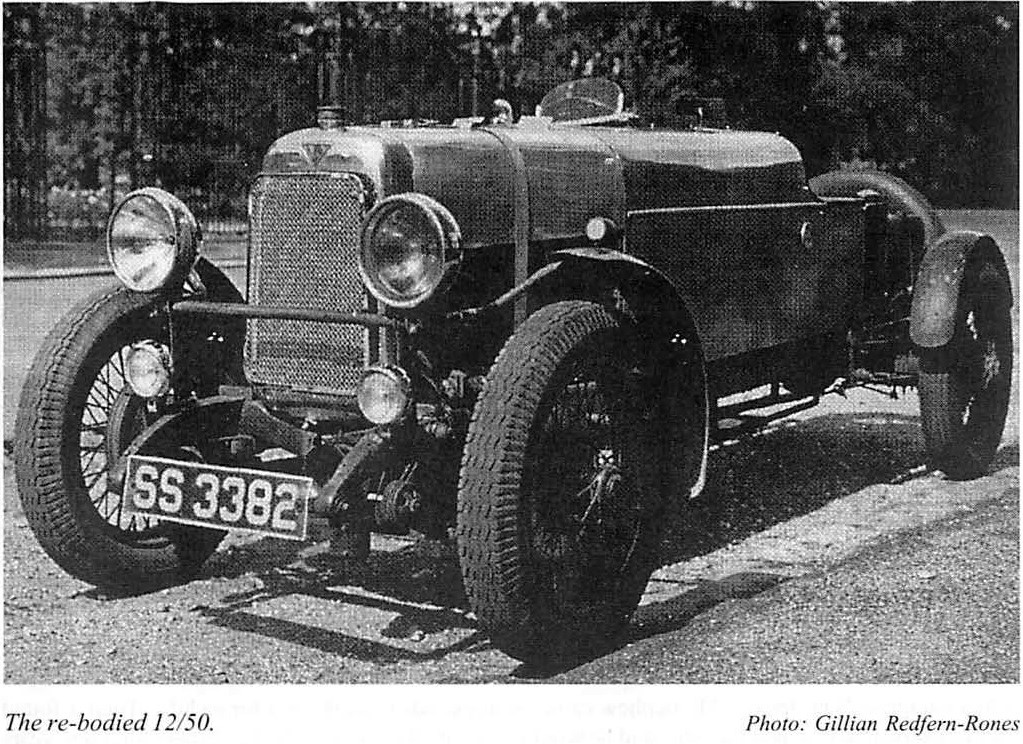
Almost instantaneously, a large wire-spoked wheel overtook my Alvis and careered down the bill, luckily bouncing over the kerb on to the grass out of the traffic. I can’t remember what caused the wheel of the 12/50 to come off, but the body on that car was ruined as it had dragged along the road. In any case this Alvis was in poor condition and needed a great deal of work, and so it was decided that we would build our own body on this, which we did to chassis width in aluminium on a wood frame.
I remember boiling water and bending the wood into curves. As the chassis was narrow, the car was a staggered two-seater. Hand brake and gear lever on the outside of the body. Two spare tires held down the back end to give it some rear stability. The day the car was finished, we left on vacation for Spain. We drove all the way through France through the Pyrenees down to Malaga. The only car problem we had was a melted balance pipe to the carburettors. (Many other stories to this trip, which was in 1961.)
Meanwhile my Alvis was sitting in a garage in North London. We had decided to take it down to the chassis and restore it to concours condition. A rear door which had become damaged was taken, with its companion as a pattern, to a body restorer. Wheels were re-spoked, sand-blasted and stove-enamelled. All the interior was restored by the London Trimming Company. One hundred yards of braid. New carpet. New interior felt. Leather covered gear lever and hand brake. Polished rosewood dash panel. All metal accessories, handles, winders, knobs, switches, etc., were re-nickel-plated. The engine was completely restored using the last set of pistons for that model from Alvis. The gearbox was restored; it had always rattled in third gear. A new back axle with a different ratio (I don’t remember the details; after all it was 30 years ago). During this time, we had owned a variety of interesting cars including a fabric-bodied Officina Mechanica, an Aston Martin DB 2.4 Mark 4, a Ferrari which we had imported from France ourselves, a Lancia Appia pillarless saloon, and a Lancia Aurelia. Many adventures took place with these cars.
Back in the garage Albert was very slowly being assembled, and one spring morning with the help of the handle and a very strong arm we started it up. Unfortunately, the water pump gasket blew, and water poured everywhere.
I’m afraid it was pretty much downhill from there. When we eventually went to collect the doors, the body company had vanished, and so had the doors. Life took one of its twists and my personal life collapsed. I moved the Alvis for safekeeping to the garage of a mechanic friend in South London.
This friend had owned numerous wonderful cars. One of which had won the world land speed record at Brooklands race track ca. 1918: the Straker Squire. I was fortunate enough to actually have a ride in this machine. It was a bench style two-seater, because the mechanic rode with the driver during these races. At one time, I had a photograph of this car as it appeared in its glory days. It was painted black with white stripes. When I rode in it, it was red. There is a good story about this adventure, but as it is not an Alvis story I will not get diverted.
For the next ten years the Alvis sat in the garage. I had left England and come to America. It took me some time to be able to afford to ship the Alvis over here. I did this in 1986. It rolled off the flatbed into a garage in New Jersey. My nephew came on weekends to work on it for a while. Then, I found an Englishman in Connecticut who said he would finish it. The Alvis sat in his garage for a few years with very little progress. Although it did get new tires the correct size, and the magneto was refurbished by an Alvis aficionado in England.
Becoming more frustrated, I had the Alvis moved by flatbed one more time to our upstate New York home, where it has been sitting in the barn ever since. By going to the Rhinebeck motor show, I have found some leads for restoration but have not been able to resolve the interest. How sad that this fabulous machine, born to move under its own power, has been dragged around the world on other wheels, stored in many halfway houses, and now sits patiently, quietly fading away.
ROMANCE
Your letter arrived the very day that I had decided to divorce Albert. Was it a sign, or just one of those inexplicable coincidences? I am still in love with Albert. How could I not be?
There are so many unique things about him. There is so much sharing. I think most of all he holds my youth, and that is a very hard thing to part with. We have been together for close to forty years.
Of course, there have been times apart, times spent on different continents without each other. But as one gets older, those times fade, and the memories of past thrills together grow stronger. I don’t know how he feels, or indeed if he feels very much at all now. He is very old. He is, I imagine, sad, lonely, and unable to regain his former glories, unless, of course, I release him.
Then, perhaps, he could become alive once again and even more desirable. He is so handsome, and he has such integrity. He’s made of the right stuff. That’s the hardest part: I have to let him go so that at least one of us can have another chance.
Today was one of those beautiful fall days. The bluest of blue skies, the leaves just a tinge of gold, the sun bright, warm and optimistic the perfect day to climb into the Alvis press the starter, listen to the deep sound of the slow revving engine and revel in the comforting smell of the leather seats. When I was with Albert, everything was so sensory: so intense. Carefully and practically clutchless into first gear, hand brake off. Ease forward, and gain a little speed to push the leather gear lever into second. Click. More power. Listen to the engine sound. Push. Click. Third. The breeze is wafting past my face. Listen. Push Click. Ahh. Into fourth. Freedom.
BEST OFFER! Two words with a certain sadness, even when spoken with a youthful ‘perky’ voice there’s an emptiness a hollowness. After all, what is ‘Best?’ Good, better, best. -better than what? Somehow “good” sounds better than best. A good offer has a positive ring – could be a good thing. Good offer. Good Job. Nice benefits. Room for growth. But, in this case it’s ‘best offer.’
As I carefully word the ad, it will have to be best. It’s for you. My past. Who’ll give an offer for the past? Unimportant moments woven in the braid around the doors, the golden silk tassels, the scent bottle holder. Step up, step up, see the 16.95 four-wheeler. Best offer. Best of a poor bunch. How many words in the ad? How many years in the past? How much enthusiasm, how much interest? How much are you worth?
Age to you is an enhancement; age for me is not.
Offers for me are past; offers for you are ahead.
Let’s hope we get a really best offer.
You deserve it, you in your patient, silent waiting state, shivering in the barn.



 Alvis Archive